
The Real Cost of Review Management (And Why You're Wasting Money)
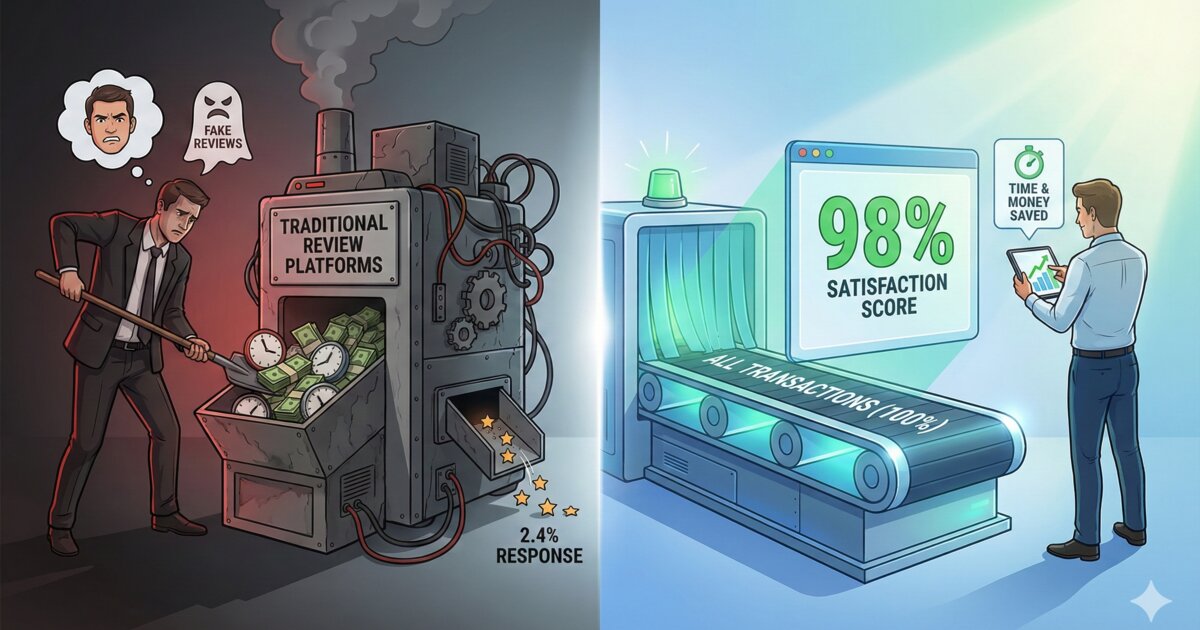
The Premium Platform Trap: Typical costs are £7,000+ Annual Costs for 2.4% Response Rates
Every month, you're spending hard won revenue on maintaining your position and rating on review platforms. You are doing this because you need to prove what a great customer experience you give on every transaction. You know that not having this type of social proof means you competitors will win out.
So you're paying subscription fees—sometimes thousands of pounds a year—for review management systems. Trustpilot, Reviews.io, Yotpo, and others all position themselves as essential elements of your store's reputation. They promise authentic customer feedback and possible improved conversion rates.
However, despite enrolling in these premium platforms, you're lucky if 2-3% of your customers ever leave a review. One of our case studies tracked a store paying £599 monthly for Trustpilot's premium service—that's £7,188 per year. Their reward? A measly 2.38% response rate. They were paying £24 a review on average!
That subscription fee is just the start though: You likely invest staff time crafting the perfect review responses (both positive and negative), you most likely spend a lot of emotional energy dealing with fake reviews, and this leaves the opportunity cost of not focusing on actual business improvements.
Time Theft: 20 Hours Per Week Managing What Should Be Automatic
Every week, you're losing precious hours to review management that could be spent actually improving your business.
The time commitment is neverending: crafting the perfect follow-up emails (that most customers ignore anyway), responding to reviews, disputing fake reviews, and monitoring new items. Many store owners find themselves spending hours each week on activities that generate minimal results.
Perhaps most frustrating is the response rate reality—chasing good reviews is incredibly difficult when less than 3% of happy customers bother to leave feedback. You're essentially begging the majority of your satisfied customers to do something they have no interest in doing.
And then there's the blackmail factor. When faced with a malicious one-star review, often the only way to get it removed is by offering a refund—even when you've done nothing wrong. You're being held hostage by customers who've discovered they can weaponize the review system.
Fake Reviews
You're paying premium prices for a system that isn't properly policed.
Despite the sophisticated dashboards and verification promises, fake reviews keep slipping through. You're investing in platforms that can't protect you from:
- Competitor sabotage - Rival businesses leaving malicious reviews to damage your reputation
- Disgruntled ex-employees - Former staff members targeting your business with vindictive feedback
- Professional review farmers - Organized operations using real accounts and verified purchase histories to manipulate ratings
There's even an underground economy of review brokers where positive reviews can be bought in bulk. These services are often sophisticated enough to bypass detection systems, making them nearly impossible to identify.
A New Approach is Here
What if there was an elegant solution that gave you a much better representation of your store's actual performance?
Instead of chasing the vocal 2-3% with expensive review solicitation, imagine tracking 100% of your transactions automatically. No more begging customers for feedback. No more managing multiple review platforms. No more wasted hours on activities that barely move the needle.
StoreScore offers exactly this approach using "satisfaction by default" - just like real-world shopping, we assume customers are happy unless they tell us otherwise. Instead of bombarding customers with review requests, we send one simple message after delivery. For customers, it's effortless - they only need to respond if something went wrong.
The result is a clear percentage score showing exactly how many transactions went smoothly (like "94% of transactions were satisfactory over the last 90 days") rather than confusing star ratings based on tiny samples. Every score is tied to real, verified purchases, making fake reviews impossible.
This can work as a complete replacement for traditional review platforms, eliminating those hefty subscription costs and time drains entirely. Or, if you prefer to keep your existing review setup, StoreScore can fill in the massive gaps—giving you the complete picture that traditional platforms miss.
The result? Significant savings on subscription costs, dramatically reduced management time, and finally—data you can trust to represent your real customer satisfaction levels.
For more on why store ratings are often unrepresentative and how coverage-based measurement helps, see why store ratings don't represent the average customer experience.